
Exterior Siding Caulking & Weather Sealing in Bowie, MD
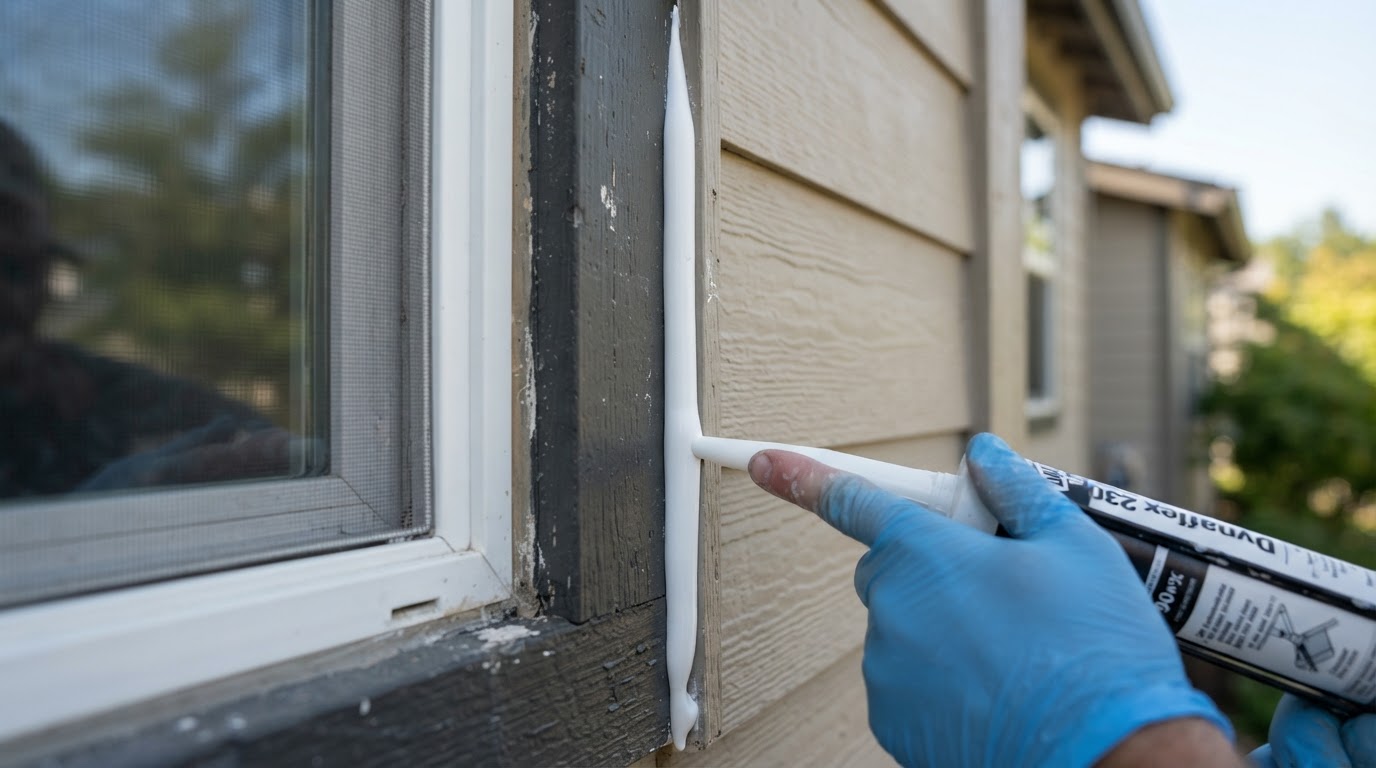
Exterior siding caulking and weather sealing renews the sealant at the joints where a wall assembly is actually designed for it — not every seam, and never the drainage a siding system needs to breathe. For Bowie homeowners, the value is catching cracked caulk before a wet season lets water behind the trim, and resealing only the joints that should be sealed.
Bowie Window and Siding handles exterior caulking and weather sealing for homeowners throughout Bowie, Maryland, renewing the right joints and leaving the intended drainage paths open.
REQUEST A FREE ESTIMATE
Tell us about your home improvement project and we will connect with you to review style, material, and scheduling options.
Signs Exterior Sealant May Need Renewal
Exterior caulk does not last forever. Sun hardens it, temperature cycling stretches it, and freeze-thaw works it until it cracks or pulls away from the joint. The signs are usually visible up close: a caulk bead that has split, a joint where the sealant has separated from the trim or the window frame, or a gap that has opened where two materials meet. Homeowners near Bowie often notice it first at a window or door trim, where the most movement and sun exposure converge.
Renewing the sealant is maintenance — but only at the joints the wall design expects it. The distinction matters: caulking the wrong joints traps water, and skipping the old caulk makes the new caulk fail. The right work is selective and prepared, not a blanket bead around the whole house.
Cracked Caulk Beads
Sealant that has split along the joint from age, sun, or movement.
Separated Joints
Caulk pulling away from the trim or window frame at the edge of the joint.
Hardened Sealant
A bead that has gone rigid and lost the flexibility to stretch with the joint.
Opened Gaps
Gaps that have appeared where two materials meet as the home moves.
Seasonal Wear
The cumulative effect of summer heat and freeze-thaw across the year.
Drainage Kept Open
Confirming intended weep paths and siding laps are not sealed shut.
Where Exterior Caulking Is — and Is Not — Appropriate
The most important thing to get right about exterior caulking is that it does not belong everywhere. Caulk seals the joints where the wall assembly is designed for sealant — certain window-to-trim transitions, door casing joints, penetrations, and selected vertical joints — and it should not be applied where the siding is meant to drain. Sealing the horizontal laps in vinyl siding or the weep paths at the bottom of an opening traps moisture behind the cladding and causes exactly the rot and water damage the caulking was supposed to prevent. The right work is selective.
Caulk These Joints
- Window-to-trim and door-to-trim transitions
- Penetrations for vents, pipes, and fixtures
- Selected vertical joints where the wall design expects sealant
- Trim interfaces where two materials meet
Seal where the wall assembly is designed for sealant.
Do Not Caulk These
- Horizontal laps in vinyl and lap siding
- Weep paths and drainage gaps at the bottom of openings
- Joints the siding uses for expansion and drainage
- Over old, failed caulk that was not removed first
Sealing intended drainage traps water behind the siding.
Weather Sealing for Maryland's Seasonal Conditions
Maryland's seasons are what age exterior sealant the fastest. Hot, humid summers bake caulk hard, and the wet spring and fall are when failed joints actually let water in. Freeze-thaw cycling through the winter works every joint, cracking caulk that has lost its flexibility and opening gaps where two materials meet. A fall inspection before the wet, cold weather arrives is the practical rhythm for Bowie homes — it catches the hardening a summer caused before a winter and a wet spring exploit it.
A typical weather-sealing visit may begin with identifying the joints that are cracked or separated, removing the old caulk down to clean material, drying and preparing the joint, and applying a fresh sealant bead only where the wall design expects it — never across the siding laps or the weep paths. We do not recommend sealing intended drainage, and we do not claim caulk is a substitute for flashing. We confirm the right joints during the estimate.
Exterior Caulking & Weather Sealing Questions, Answered
Direct answers about exterior sealant and weather sealing for Bowie homeowners.
Have a question about your home? Call 240-892-7205
Seal the Right Joints, Leave the Drainage Open
Exterior caulking and weather sealing is about renewing sealant where it belongs — the trim, window, and door joints the wall design expects — and leaving the drainage paths and siding laps that need to breathe. The right sealing is selective and prepared, not a blanket bead.
Bowie Window and Siding helps homeowners in Bowie, Maryland maintain exterior sealant honestly and completely. We also serve homeowners throughout nearby Maryland communities.