
House Wrap & Weather Barrier Installation in Bowie, MD
House wrap and similar water-resistive barrier systems are installed behind many exterior cladding systems to help manage bulk water and air movement as part of the wall assembly. It's the layer that stands between your siding and the sheathing beneath — and it matters more than most homeowners realize. Bowie Window and Siding installs and evaluates weather barriers for homes throughout Bowie, Maryland.
This service is most commonly relevant during siding replacement or exterior renovation, when the wall is open and the barrier is accessible. We do not describe house wrap as complete waterproofing — it's a moisture-management layer whose performance depends on the system, materials, and installation.
REQUEST A FREE ESTIMATE
Tell us about your home improvement project and we will connect with you to review style, material, and scheduling options.
What Does House Wrap Do Behind Siding?
House wrap is a water-resistive barrier — a breathable sheet material installed over the wall sheathing and beneath the siding. Its job is to help manage bulk water that gets past the siding and to slow air movement through the wall assembly. It is not waterproofing in the sense of stopping all water; it's a drainage plane that lets water that reaches it run down and out, away from the sheathing and framing.
A complete weather barrier system includes more than the wrap itself. Proper lapping of the material, flashing at windows, doors, and other penetrations, sealing of seams, and integration with the siding's trim and accessories all determine whether the barrier actually performs. A well-installed barrier helps the wall dry if moisture gets past the siding; a poorly installed one can trap water and cause the very damage it was meant to prevent.
Drainage Plane
Helps water that gets past the siding run down and out, away from sheathing and framing.
Air Movement
Slows air leakage through the wall assembly, which can contribute to comfort.
Flashing Integration
Works with flashing at windows, doors, and penetrations to direct water out.
Breathable Layer
Lets the wall assembly dry if moisture gets past the siding surface.
When Should a Weather Barrier Be Evaluated or Replaced?
The most practical time to evaluate or replace a weather barrier is during siding replacement or exterior renovation, when the old siding comes off and the wall sheathing is exposed. At that point the condition of the existing barrier — whether it's intact, torn, deteriorated, or missing entirely — is visible and can be addressed before new siding goes on. Installing new siding over a compromised barrier hides a problem rather than fixing it.
We do not imply that every repair requires full house-wrap replacement. Localized siding repairs that don't expose the wall sheathing typically don't involve the barrier at all. But when siding replacement reveals water damage, deteriorated sheathing, or a barrier that's torn or improperly lapped, addressing the barrier as part of the project helps ensure the new siding performs the way it should.
During Siding Replacement
When old siding is removed, the exposed barrier can be inspected and repaired or replaced before new siding is installed.
After Water Damage
If water has reached the wall assembly, the barrier beneath should be evaluated for tears, deterioration, or improper lapping.
At Window & Door Openings
Flashing integration at openings is critical — water most often enters the wall assembly at these transitions.
Localized Repairs
Spot siding repairs that don't expose sheathing typically don't require barrier work — scope depends on what's exposed.
House wrap is not complete waterproofing. It's a water-resistive, weather-managing layer whose actual performance depends on the system, materials, and installation. We do not guarantee prevention of all moisture problems — proper barrier installation manages moisture, it doesn't eliminate the possibility of water entry entirely.
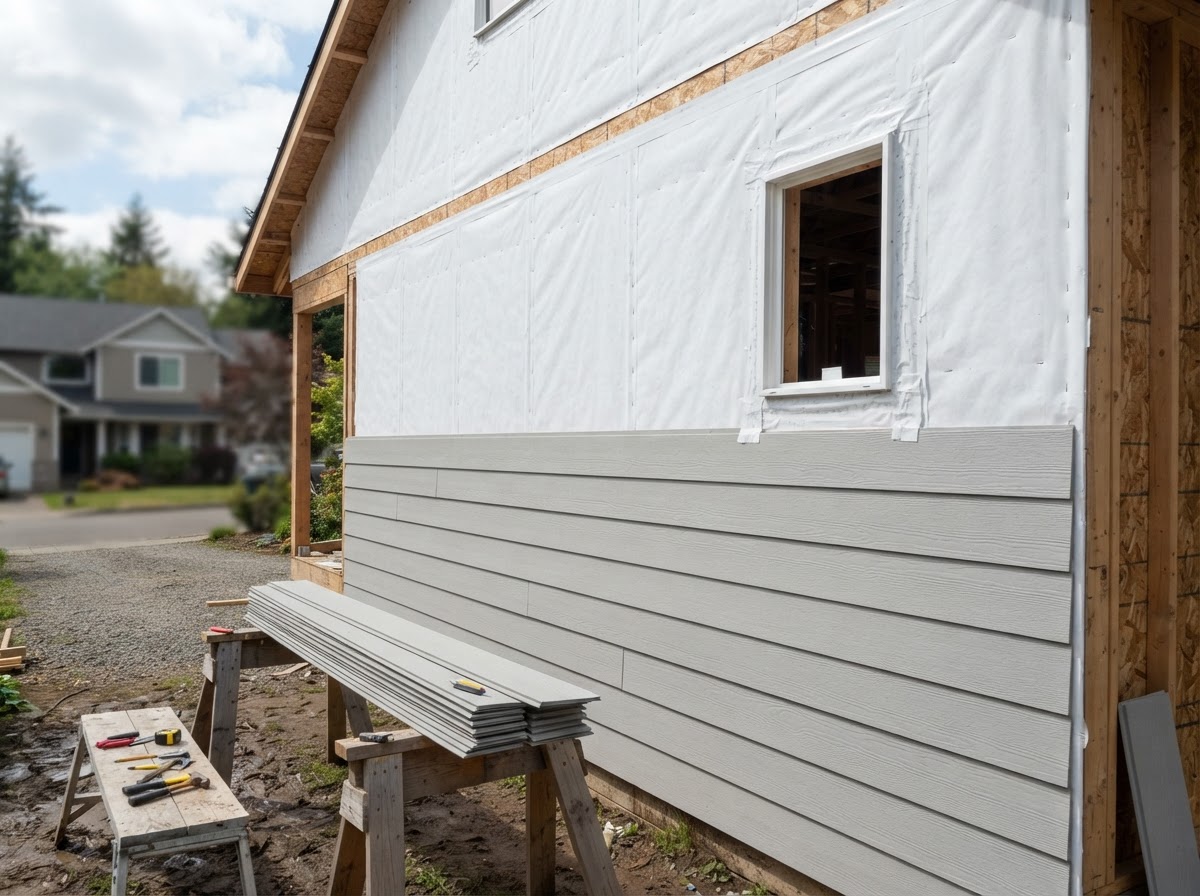
House Wrap, Siding & Moisture Management in Maryland
Central Maryland's humid summers, heavy rain, and wind-driven thunderstorms put real water stress on exterior walls. Wind can push rain behind siding at joints and openings even when the cladding itself is intact — which is exactly the scenario a water-resistive barrier is designed to manage. The barrier catches that water and lets it drain down and out, rather than soaking into the sheathing.
Proper lapping of the wrap, integration with flashing at windows and doors, and sealing of seams are what make the barrier actually work in those conditions. A barrier that's torn, improperly lapped, or missing at an opening can let water reach the sheathing and framing — the kind of hidden damage that shows up later as rot. For Bowie homes, getting the moisture-management layer right is as important as the siding itself.
House Wrap & Weather Barrier Questions, Answered
Direct answers about water-resistive barriers behind siding for Bowie homes.
Have a question about your home? Call 240-892-7205
Get the Moisture-Management Layer Right
House wrap and weather barriers are the layer that manages water behind your siding — and they only work when installed and integrated correctly. During siding replacement or exterior renovation, getting this layer right helps the new siding perform for years.
Bowie Window and Siding helps homeowners in Bowie, Maryland evaluate and install weather barriers as part of exterior projects. We also serve homeowners throughout nearby Maryland communities.