
Roof Flashing Repair in Bowie, MD
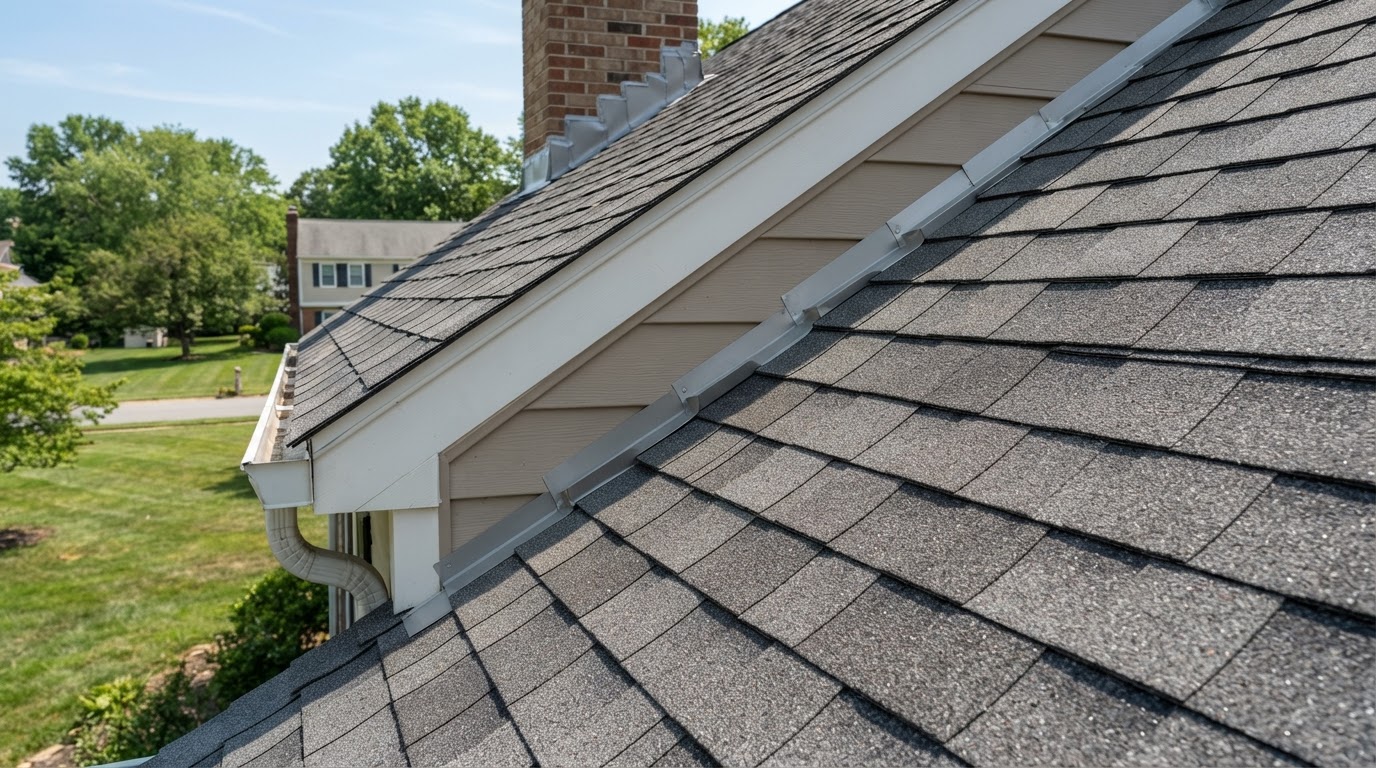
Roof flashing is the metal that seals the transitions and penetrations where shingles alone cannot — at chimneys, walls, valleys, vents, and skylights. When flashing lifts, corrodes, or separates, water enters at the joint and a leak begins. Roof flashing repair fixes or replaces that failed metal and leaves the sound shingles in place.
Bowie Window and Siding helps homeowners throughout Bowie, Maryland repair damaged roof flashing, identifying which flashing point has failed before recommending a repair.
REQUEST A FREE ESTIMATE
Tell us about your home improvement project and we will connect with you to review style, material, and scheduling options.
Signs Roof Flashing May Need Repair
Flashing failures show up as leaks at the joints where the roof is interrupted — a stain near a chimney, dampness along a wall where the roof meets it, a leak in a valley after a storm, or water around a vent or skylight. Because flashing is at the transitions, a flashing leak is usually near a change in the roofline rather than out in the middle of a slope. The leak may only appear in wind-driven rain, when water is pushed up under a lifted flashing edge that would shed ordinary rainfall.
Visible signs include lifted or separated metal at a chimney or wall, corroded or stained flashing, gaps where the flashing has pulled away from the surface, and failed sealant at the joints. For homes near Bowie, where wind and heavy rain test every flashing edge, a leak that appears after a thunderstorm often points to a flashing detail that held before but failed under wind-driven water. We do not assume the cause without an inspection — the roof has to be evaluated to confirm which flashing point has failed.
Leaks at Transitions
A stain or drip near a chimney, wall, valley, or penetration often points to flashing that has failed at the joint.
Lifted or Separated Metal
Flashing that has pulled away from the surface or lifted at the edge lets wind-driven rain behind it.
Corroded Flashing
Metal that has corroded or stained has lost its ability to direct water over the joint reliably.
Storm-Only Leaks
A leak that appears only in wind-driven rain often traces to a flashing edge that fails under pressure.
Repairing Flashing vs. Replacing Damaged Components
Flashing repair ranges from re-securing and resealing a lifted edge to replacing a full piece of metal. When the flashing has simply lifted or separated but the metal is sound, re-fastening it to the surface and resealing the joints can restore the seal without new material. When the metal has corroded, bent, or been displaced by a storm, replacing the damaged piece is more durable than trying to salvage it. Sealant has a role in the repair — sealing fasteners and overlaps — but it is not a substitute for sound, properly integrated metal.
If a flashing problem has let water behind it long enough to damage the deck or the wall beneath, the repair may extend to the wood or substrate underneath. The surrounding shingles do not need to come off for a flashing repair when they are still serviceable. We do not claim a specific flashing configuration fits every roof — the locations and the type of metal depend on the roof design, and the repair matches what is actually there.
Re-secure & Reseal
Lifted or separated flashing that is still sound is re-fastened to the surface and the joints resealed.
Flashing Replacement
Corroded, bent, or displaced metal is replaced with new flashing integrated into the roof.
Deck Check Beneath
Where water has entered behind failed flashing, the deck and substrate beneath are checked for damage.
Transition Sealing
Chimneys, walls, valleys, and penetrations are sealed so wind-driven rain cannot enter at the joint.
Storm Damage Repair
Wind-bent or displaced flashing after a storm is repaired or replaced to restore the seal.
Shingles Left in Place
Sound shingles around the flashing stay in place; the repair targets the metal, not the field of the roof.
Roof Flashing and Wind-Driven Rain Near Bowie
Wind-driven rain is what tests roof flashing in the Bowie area. Ordinary rainfall runs down the slope and over sound flashing, but a thunderstorm with strong wind pushes water up and behind flashing edges that would shed a calm rain. Summer storms are the main event, and winter adds freeze-thaw cycling that widens small gaps in the flashing joints over time. A flashing edge that held for years can start leaking after one storm loosens it, and the leak may only appear when the wind is driving the rain from a specific direction.
A typical roof flashing repair may include evaluating the flashing at the transitions and penetrations in the area of the leak, identifying which piece has lifted, corroded, or separated, re-securing or replacing the failed metal, resealing the joints and fasteners, and checking the deck beneath for water entry. We do not claim a proprietary process; the steps are the standard ones that restore the seal. We also do not encourage homeowners to climb a wet or steep roof to inspect flashing — ground-level observation and a professional evaluation are the safe way to start.
Roof Flashing Repair Questions, Answered
Direct answers about repairing roof flashing for Bowie homeowners.
Have a question about your home? Call 240-892-7205
Repair the Flashing, Stop the Leak at the Joint
Roof flashing repair is about restoring the metal that seals the transitions and penetrations where shingles alone cannot. The right repair targets the failed flashing and leaves the sound shingles in place.
Bowie Window and Siding helps homeowners in Bowie, Maryland repair damaged roof flashing honestly. We also serve homeowners throughout nearby Maryland communities.
Related Exterior Services