
Downspout Extension Installation in Bowie, MD
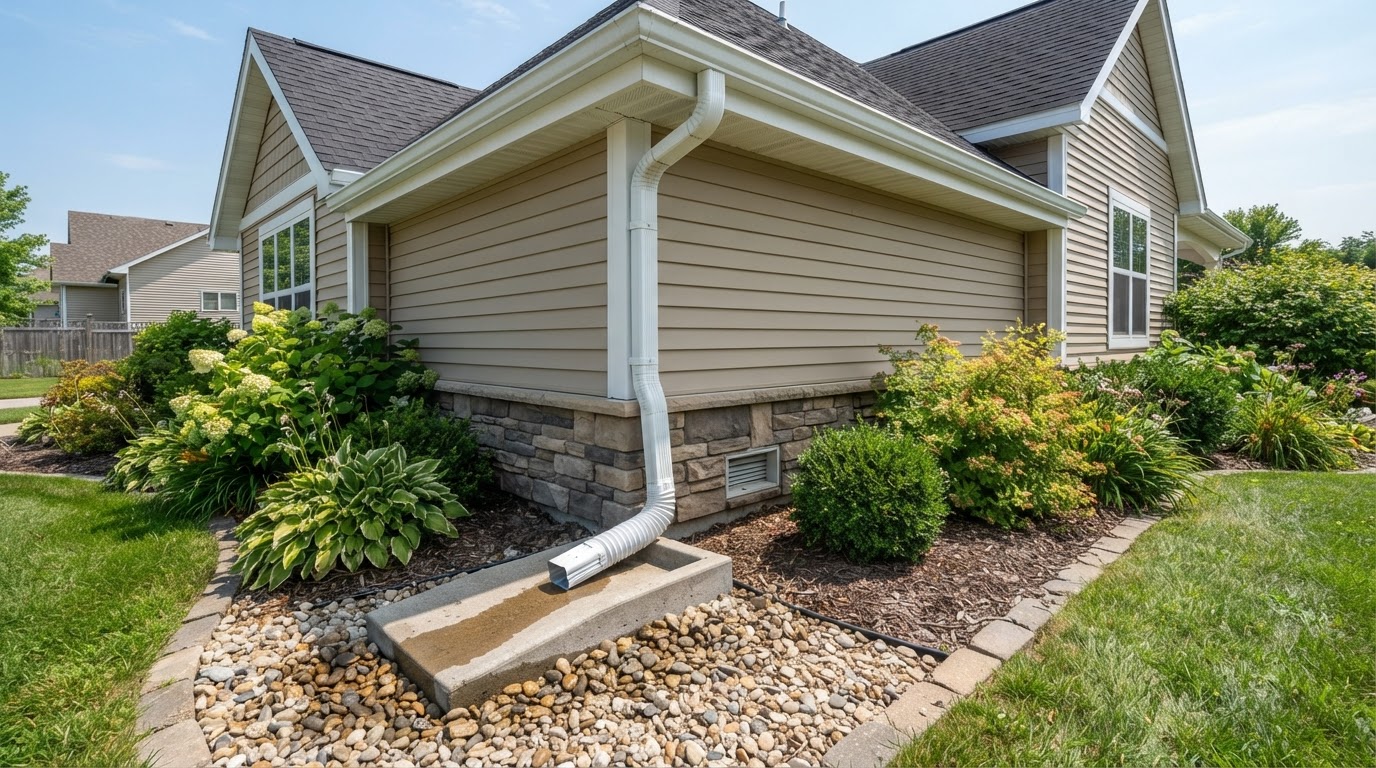
Downspout extension installation gives Bowie homeowners a longer drainage path that carries roof runoff farther from the foundation before it discharges. An extension connects to the bottom of a downspout and moves water past the wall to a point where it can drain away from the home.
Bowie Window and Siding installs residential downspout extensions for homeowners throughout Bowie, Maryland — planning the discharge direction, the extension length, and the drainage path around the property's grading and layout.
REQUEST A FREE ESTIMATE
Tell us about your home improvement project and we will connect with you to review style, material, and scheduling options.
Why Downspout Extensions Matter
A downspout that discharges right at the base of the wall can put water exactly where it should not go — saturating the soil at the foundation, washing out landscaping, and pooling in low spots near the home. A downspout extension carries that water farther from the wall before it reaches the ground, giving the runoff a chance to move away from the foundation along the natural or graded drainage path. For homes where the grading slopes back toward the wall, or where the discharge area is a low spot, an extension can be the difference between water that drains and water that pools.
Extensions make sense when water is pooling near the downspout, when the discharge is too close to the foundation, when the yard directs runoff back toward the wall, or when a new downspout location needs a longer drainage path. They are available in above-ground, hinged, flexible, and rigid configurations, and some downspouts connect to underground drainage for a fully buried discharge path. The right extension depends on the grading, the property layout, and where the water can go without creating a new problem — and on not discharging onto neighboring properties or public areas.
Foundation Protection
Carrying water farther from the wall reduces saturation at the foundation, where pooled runoff can cause moisture problems.
Discharge Direction
An extension directs water to a point where the grading or the drainage surface carries it away from the home.
Pooling Fix
When water pools near a downspout, an extension can move the discharge past the low spot to a better drainage area.
Matched to the Yard
The extension length and direction are planned around the grading, the property layout, and where water can discharge.
Above-Ground vs. Underground Discharge Options
Downspout extensions come in several forms, and the right one depends on the yard, the walkways, and where the water can go. Above-ground extensions are visible but simple to install and maintain. Hinged extensions flip up out of the way for mowing. Rigid extensions are a more permanent above-ground solution. Underground drainage carries the water through a buried pipe to a discharge point, which is cleaner visually but requires planning the pipe route and the slope. Every option is chosen against the property — there is no universal answer.
Above-Ground Extensions
Visible extensions that carry water from the downspout to a discharge point. Simple to install and to inspect for clogs.
Hinged Extensions
A hinged extension flips up out of the way for mowing or yard work, then drops back down to direct water during rain.
Rigid Extensions
A more permanent above-ground extension that stays in place. Durable and a fixed discharge path for the runoff.
Underground Drainage
A buried pipe carries water from the downspout to a discharge point away from the home. Requires planning the route and slope.
Flexible Options
Flexible extensions are available, though some are better suited as seasonal or temporary additions rather than permanent solutions.
Walkway Routing
Where a walkway is in the path, a hinged, underground, or rerouted discharge avoids a tripping hazard from a surface extension.
Directing Roof Runoff Around Bowie Homes
In the Bowie area, a downspout that discharges right at the wall can put a lot of water at the foundation during a summer thunderstorm, and that water has to go somewhere. If the grading slopes away, it may drain naturally. If the yard slopes back toward the home, or if the discharge area is a low spot, the water pools near the wall — which is the problem an extension is meant to address. Through the winter, snowmelt and cold-season rain add to the runoff, and a discharge path that carries water away from the foundation helps in every season.
A typical downspout extension project may include assessing where each downspout discharges, evaluating the grading and the drainage conditions at the property, choosing an above-ground or underground discharge path, sizing the extension to the downspout, and confirming the discharge does not direct water onto a neighboring property or a public area. We do not recommend a fixed extension length for every home — the length and the direction are planned around the yard.
Downspout Extension Questions, Answered
Direct answers about downspout extensions for Bowie homeowners.
Have a question about your home? Call 240-892-7205
Direct Roof Runoff Away From Your Bowie Home
Downspout extension installation carries roof runoff farther from the foundation to a discharge point where water can drain away from the home. The right extension is planned around the grading, the property layout, and where the water can go.
Bowie Window and Siding helps homeowners throughout Bowie, Maryland plan and install downspout extensions and discharge paths. We also serve homeowners in nearby Maryland communities.